
Dit bericht kan affiliatielinks bevatten. We kunnen geld of producten verdienen aan de bedrijven die in dit bericht worden genoemd.
 © Depositphotos.com / jeanro
 Ik denk dat je het met me eens zult zijn als ik zeg:
Een van de eerste en belangrijkste dingen die u als nieuwe eigenaar moet leren, is hoe u een puppy zindelijk kunt maken... en snel!
Het blijkt dat je de tijd die nodig is om je puppy zindelijk te maken drastisch kunt verkorten, waardoor je de dagen van schonere vloeren en tapijten veel eerder kunt doorkomen, door jezelf te bewapenen met slechts een beetje kennis en een goed opgesteld plan te volgen.
En in dit artikel geef ik je een gedetailleerde, stapsgewijze methode die je kunt volgen om je puppy zo snel mogelijk zindelijk te maken, met zo min mogelijk ‘ongelukken’, rommel en schoonmaak onderweg.
Ik beloof geen ‘magische pil ’ of ‘huistrainingsgeheim ' waarmee uw puppy binnen een week zindelijk wordt. Een dergelijk geheim bestaat niet en de tijd die het kost zal verschillen van puppy tot puppy en van eigenaar tot eigenaar.
Maar wat ik wel aanbied is een uitgebreide gids, geschreven op basis van talloze uren onderzoek en mijn eigen zindelijkheidstraining, die mij heeft geleerd wat wel en niet werkt.
Als u deze gids met geduld, consistentie en toewijding volgt, kan ik garanderen dat u zowel uw puppy als uzelf zo snel en stressvrij mogelijk van complete beginners naar huistrainingstoppers zult brengen.
SNELLE TIP: Om het aantal ongelukken in uw huis te verminderen, wilt u er zeker van zijn dat u de urinegeur grondig verwijdert. Wij adviseren een enzymatische reiniger zoals Puppy In Training Stain &Odor Eliminator.
‘Hoe je een puppy zindelijk maakt ' is het 11e artikel in mijn serie 'Ultieme gids voor zindelijkheidstraining'.
De voorgaande 10 artikelen bevatten een schat aan ondersteunende informatie die veel van de meest voorkomende vragen over zindelijkheidstraining beantwoordt en u de kennis biedt waarmee u weloverwogen beslissingen kunt nemen over de methode en stijl van zindelijkheidstraining die u gaat volgen.
Ik heb echter met opzet deze ‘how-to gemaakt ‘ gids zo compleet en op zichzelf staand mogelijk, dus het lezen van de voorgaande artikelen is niet essentieel.
Ik herhaal de belangrijkste informatie hier in minder detail en link vervolgens naar die artikelen als je meer informatie en een beter begrip wilt.
Om deze gids te gebruiken, raad ik aan om hem één keer volledig van begin tot eind te lezen, dan heb je alles behandeld wat je moet weten om een puppy succesvol zindelijk te maken.
Ik waarschuw je:dit artikel is lang. Heel lang. Het kost je waarschijnlijk 15 minuten om te lezen. Maar wat u leert, de beste manier om een puppy zo snel mogelijk zindelijk te maken, zal u de tijd die u in de eerste paar weken en maanden met uw puppy heeft geïnvesteerd, honderden keren terugbetalen.
En als u een bladwijzer voor deze handleiding maakt, kunt u deze als naslagwerk gebruiken door in de inhoudsopgave hierboven te klikken. Zo gaat u rechtstreeks naar een gedeelte als u uw geheugen over een bepaald onderwerp wilt opfrissen.
Dus laten we beginnen…
SNELLE AANBEVELING: Een ander hulpmiddel waar we dol op zijn bij zindelijkheidstraining is de deurbel voor het hondenpotje, Smart Bell. Het vergt een beetje training, de Smart Bell waarschuwt u wanneer uw puppy zindelijk moet worden en het is ook geweldig om te werken aan het signaal ‘Aanraken’.
Als een puppy acht weken oud is, weet hij niet beter dan overal waar hij staat te plassen of poepen als de drang toeslaat.
Ze hebben geen idee dat dit niet de manier is waarop het hoort te gebeuren, of dat je het plassen op je tapijt niet acceptabel vindt.
Het is aan u om een geschikt plekje in de badkamer te kiezen, uw puppy te trainen om deze te gebruiken en hem tegelijkertijd te leren dat het niet acceptabel is om ergens anders in uw huis op het potje te gaan.
Om dit te bereiken zijn er twee essentiële sleutels tot succes. Twee sleutels die het uiteindelijke doel vormen van elke methode of techniek die je ooit zult tegenkomen:
Een groot deel van het bereiken hiervan is door uw puppy eenvoudigweg vaak naar de aangewezen toiletplek te brengen.
Op deze manier krijg je het grootste aantal kansen om ze te prijzen omdat ze het goede doen. En omdat ze leeg zijn, verminder je ook de behoefte aan potjes als ze op de verkeerde plaatsen staan.
Maar het is niet zo eenvoudig als dit. Ook thuis moet je fouten voorkomen door een combinatie van opsluiting en geconcentreerd toezicht. En pas deze 24/7 taak aan in uw huidige levensstijl en routines.
Om dit te doen is zowel een kunst als een wetenschap, waarbij een goed doordachte en zeer geplande aanpak nodig is om uw puppy de grootst mogelijke kans te geven om het goede te doen, terwijl de mogelijkheden om het verkeerde te doen worden beperkt.
En deze gids laat u precies zien hoe.
Hoe lang kan een puppy zijn blaas vasthouden? Hoe vaak moet een puppy per dag op het potje? Hoe lang duurt het voordat uw puppy volledig zindelijk is?
Er zijn veel vragen die een eigenaar zal hebben als hij begint met zindelijkheidstraining en er staat veel verkeerde informatie opgeschreven.
Om de meest gestelde vragen te beantwoorden heb ik het volgende artikel geschreven:Basisbehoefte om de feiten te kennen voordat je begint.
Ik raad u aan dat artikel te lezen, zodat u realistische verwachtingen heeft van uw puppy en uzelf, zodat u weet wat u beiden kunt bereiken in welk tijdsbestek.
 © Depositphotos.com / nasirkhan
 Omdat uw puppy geen idee heeft wat u van hem vraagt of waarom, bent u het belangrijkste onderdeel van het zindelijkheidstrainingsproces.
Het is aan jou om ze aanvaardbare toiletgewoonten aan te leren en je moet dit doen op een manier die voor hen zo gemakkelijk te begrijpen is en zo stressvrij mogelijk.
Hoe je dingen benadert, zal een dramatisch effect hebben op hoe soepel dingen zullen verlopen, zozeer zelfs dat ik een heel artikel aan de kwestie heb gewijd:De mentaliteit en aanpak die je moet volgen bij zindelijkheidstraining.
In het artikel bespreek ik traditionele methoden die nooit gebruikt mogen worden, waarom ze dat niet zouden moeten doen en wat je in plaats daarvan zou moeten doen.
Ik bespreek hoe je de rol van gids en trainer op je moet nemen, geduldig en begripvol moet zijn, maar toch standvastig en consistent.
Ik bespreek hoe u met de natuurlijke instincten van uw puppy kunt werken, hoe u het beste kunt omgaan met ongelukken in huis en hoe zindelijkheidstraining de basis legt voor uw toekomstige relatie samen.
Het is belangrijk leesvoer voor iedereen die op het punt staat aan een zindelijkheidstrainingsprogramma te beginnen, dus ik raad je aan het even te lezen voordat je verdergaat met deze handleiding.
De toegang van uw puppy tot uw huis beperken totdat hij vertrouwd kan worden, is een van de beste dingen die u kunt doen om de weg naar succes sneller en schoner te maken.
Honden hebben een instinct om niet te elimineren in hun hol, de plaats waar ze eten en slapen. Het is jouw taak om je puppy ervan te overtuigen dat het hele huis zijn hol is en dat hij daarbinnen geen vuil mag maken.
Dit is zoveel gemakkelijker als u uw puppy in eerste instantie beperkt tot slechts één kamer in uw huis, hem ervan overtuigt om die eerst schoon te houden en vervolgens langzaam de ruimtes uit te breiden waar hij mag komen.
Honden kunnen niet goed generaliseren, dus zelfs als ze weten dat het niet de bedoeling is dat ze in uw keuken op het potje mogen, zullen ze dit idee niet overnemen en toepassen op uw slaapkamer.
Je moet ze leren om niet op het potje te gaan in je slaapkamer, bijna als een apart idee.
Als u meteen toegang geeft tot uw hele huis, zal uw puppy het niet als één grote ruimte zien, maar als een heleboel afzonderlijke en totaal verschillende plekken.
Maar als u klein begint, hem beperkt tot één ruimte en hem vervolgens beetje bij beetje uitbreidt, is het gemakkelijker voor uw puppy om de nieuwe ruimte te associëren met de leefruimte die hij geacht wordt schoon te houden.
Dit versnelt het sloopproces en vermindert tegelijkertijd het aantal ongelukken dat uw puppy krijgt en het aantal grondige schoonmaakbeurten dat u moet uitvoeren. Een winnende situatie voor iedereen!
 © Depositphotos.com / tairen10
 Hieronder volgt een lijst met artikelen en producten die u nodig heeft om uw puppy zindelijk te maken.
Sommige zijn essentieel, andere zijn optioneel en wat je nodig hebt, hangt af van de methode die je kiest.
Zodra u de handleiding heeft doorgenomen en uw plan van aanpak kent, kunt u bepalen wat u nodig heeft.
Als je een gedetailleerde beschrijving wilt van hoe en waarom deze items zo nuttig zijn, hoe ze gebruikt moeten worden en hoe ze helpen tijdens de zindelijkheidstraining, bekijk dan mijn artikel:
Producten, benodigdheden en uitrusting die u nodig heeft voor zindelijkheidstraining
 © Depositphotos.com / belchonock
 Wat u voedt en hoe u uw puppy voedt, heeft een ongelooflijke impact op het proces.
Ik heb een gedetailleerd artikel geschreven over hoe voedingskeuzes een enorm verschil maken tijdens zindelijkheidstraining, dat je kunt lezen door klik hier.
Het bevat een gedetailleerde bespreking van de invloed die uw keuzes op het gebied van voeding zullen hebben op uw succes en veel advies over hoe u uw puppy moet voeden.
Natuurlijk raad ik u ten zeerste aan het te lezen, zodat u op de hoogte kunt komen en dit gedeelte kunt overslaan voor het volgende. Maar voor degenen die weinig tijd hebben, zijn de belangrijkste punten van het artikel als volgt:
Voedsel van lage kwaliteit zit vol met goedkope vulstoffen, heeft een lage voedingswaarde en is moeilijk te verteren, waardoor er meer doorheen gaat.
Terwijl voedsel van hoge kwaliteit veel voedingswaarde bevat, gemakkelijk verteerbaar is en meer wordt opgenomen, waardoor er minder doorkomt.
Daarom zorgt voedsel van hoge kwaliteit ervoor dat uw hond elke dag minder ontlasting produceert, wat uiteraard ideaal is bij zindelijkheidstraining.
Omdat een puppy meer voedingsstoffen uit voedsel van hoge kwaliteit haalt en minder goedkope vulstoffen er direct doorheen stromen, is zijn ontlasting steviger en dit helpt hem bij het leren van de stoelgang.
Omdat het voedsel in een redelijk consistent tempo door het systeem van uw puppy reist, zal hij, als u hem elke dag op hetzelfde tijdstip voedt, in een patroon terechtkomen waarin hij elke dag op hetzelfde tijdstip eet.
U kunt dan een schema rond deze tijden baseren. Uw puppy leert op deze tijden een toiletpauze te verwachten en zindelijkheidstraining wordt voor u beiden gemakkelijker.
 © Depositphotos.com / lifeonwhite
 Als u, in plaats van zich aan strikte voedertijden te houden, de hele dag eten voor uw puppy laat liggen, kan hij op willekeurige tijdstippen zijn eten oppakken en opeten.
Dit staat bekend als 'gratis voeren' en is het slechtste wat u kunt doen totdat uw puppy de juiste toiletgewoonten kent.
Door op willekeurige tijdstippen te eten, zullen ze ook op willekeurige tijdstippen moeten poepen.
Omdat er geen regelmatig, voorspelbaar patroon is wanneer uw puppy moet poepen, zal zindelijkheidstraining moeilijker zijn.
Zorg er daarom voor dat uw puppy volgens een schema eet en tussen de maaltijden door de voerbak ophaalt, al dan niet leeggemaakt.
Dramatische veranderingen in het dieet leiden vaak tot dunne ontlasting of diarree, uw puppy wordt fysiek niet meer in staat om hem vast te houden en dit is het ergste wat kan gebeuren tijdens zindelijkheidstraining (om nog maar te zwijgen van al het schoonmaken dat u moet doen! )
Kies een uniek merk puppyvoeding van hoge kwaliteit en qua voedingswaarde uitgebalanceerd en houd u daaraan. Degene die de fokker van uw puppy heeft gebruikt, is meestal de beste keuze, zodat uw puppy geen verandering hoeft te ondergaan.
Als u een nieuw merk voer moet kiezen, of overweegt om over te stappen op iets beters, hebben we hier een aantal van de beste voedingsmiddelen voor Labrador-puppy's en grote honden op een rij gezet (wordt in een nieuw venster geopend).
U moet uw puppy de hele dag vrij water ter beschikking stellen, zijn inname controleren, zodat u kunt beoordelen of hij te veel of te weinig binnenkrijgt, maar u moet de toegang niet beperken omdat zijn behoeften kunnen variëren.
Het belangrijkste om te doen is dat ze de laatste 2 uur voordat ze naar bed gaan geen toegang meer hebben tot water, anders zullen ze de hele nacht vele malen door moeten gaan, wat je natuurlijk niet wilt.
Honden worden door de geur van hun eigen urine naar plekken teruggetrokken om steeds weer dezelfde plek als toilet te gebruiken.
En hun reukvermogen is zo scherp dat zelfs het kleinste spoortje urine voldoende is om een herhalingsoptreden aan te moedigen.
Daarom is het van essentieel belang dat u na elk ongeval de plek zorgvuldig schoonmaakt, waarbij u elk laatste spoortje urine en de geur ervan verwijdert. Als u dat niet doet, is de kans groot dat uw puppy weer een plasje maakt.
Dit kan je inspanningen verpesten, omdat het aanmoedigen van hen om in je huis op het potje te gaan precies het tegenovergestelde is van wat je probeert te bereiken.
Gewone huishoudelijke schoonmaakmiddelen zijn niet goed genoeg in het verwijderen van geurtjes, dus je hebt echt een vlek- en geurverwijderaar nodig die speciaal voor dit doel is ontworpen.
En je hebt een stapsgewijze methode nodig die resultaten garandeert.
Voor advies over de schoonmaakproducten die je moet kiezen, de producten die je simpelweg moet vermijden, hoe je verborgen urinevlekken kunt opsporen (met UV-licht) en een stapsgewijs proces voor een snelle en grondige reiniging, zie mijn artikel:
Er gebeuren ongelukken:hoe u vlekken en geuren van huisdieren verwijdert.
Voordat u met zindelijkheidstraining begint, moet u een zeer belangrijke beslissing nemen:krijgt uw hond een toiletplek buiten, binnen of misschien zelfs allebei? En hoe moet u beslissen?
Mijn advies is:Kies een badkamerplek buiten, tenzij je een hele goede reden hebt om anders te doen.
Een hond trainen om uitsluitend buiten naar het toilet te gaan, is gemakkelijker voor uw puppy om te begrijpen, gemakkelijker voor u om te trainen en vriendelijker voor uw neus.
Maar als je mobiliteitsproblemen hebt of op de bovenste verdieping van een hoogbouw woont, is snel naar buiten komen onmogelijk.
Dan moet u een plekje in uw huis in de badkamer kiezen, in ieder geval totdat uw puppy een sterke controle over de blaas heeft ontwikkeld.
Je kunt een combinatie van deze twee kiezen door je hondentoilet buiten te plaatsen als je er bent, maar binnen op blocnotes of papier als je er niet bent.
Dit is geschikt als u de hele dag moet werken of uw hond af en toe urenlang alleen moet laten.
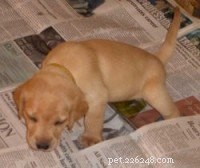
Het is een goed idee om uw puppy te ‘papieren’ om binnen naar het toilet te gaan als hij in de opsluitingsruimte zit, ook al is het uw uiteindelijke plan dat hij alleen buiten naar het toilet gaat.
Dit komt omdat het, afhankelijk van de leeftijd van een puppy, fysiek onmogelijk is om zijn blaas langer dan een paar uur vast te houden totdat hij groot is.
Persoonlijk heb ik bij elke hond die ik ooit heb gehad altijd gemerkt dat er altijd momenten zijn waarop ik ze 3, 4, misschien 5 uur alleen moet laten. Ik ben van plan dat dit niet gebeurt, maar af en toe gebeurt het wel.
Je kunt een puppy gedurende deze tijd niet in de bench zetten, dus je moet een back-upplan hebben. En dat is door ze op te sluiten in een oefenhok of een klein kamertje met een stukje papier waar ze op het potje kunnen.
Dus hoewel ik thuis waakzaam ben en mijn puppy heel actief zindelijk maak om buiten naar het toilet te gaan, moet ik hem ook op papier trainen voor de enkele gelegenheid dat ik niet thuis ben.
Nadat ik met veel vrienden en eigenaren heb gesproken, weet ik dat dit voor velen een veel voorkomend scenario is.
Veel mensen laten hun honden de hele tuin als toilet gebruiken, zolang het maar buiten is. Maar je zou kunnen overwegen om ze te trainen om elke keer slechts één specifieke plek te gebruiken.
Als ze overal in de tuin mogen komen, is de kans groot dat je niet al hun uitwerpselen kunt vinden en opruimen, wat geen goede zaak is als je kinderen hebt die daar spelen, of puppy-afzettingen rond je mooie ligstoel.
Het kan ook zijn dat de urine van uw hond 'gazonverbranding' veroorzaakt, waarbij het gras bruin wordt op regelmatig gebruikte delen van uw gazon.
Bovendien kan het, vooral in de zomer, een behoorlijke stank door uw huis veroorzaken als ze regelmatig dichtbij een deur of onder een raam plassen. Maar…
Als u ze traint om slechts één plek te gebruiken, wordt uw tuin schoner en hygiënischer voor alle andere gebruikers, heeft u geen last van met stikstof verbrand gras en kunt u uw tuin veel gemakkelijker schoonhouden.
Het is dus volkomen logisch om uw hond te trainen om elke keer een specifiek gebied te gebruiken.
Een gebied uit de buurt van deuren, ramen, barbecues of speelplekken. Maar denk alstublieft niet dat als u een plek ‘uit de weg’ kiest, u zich kunt onttrekken aan schoonmaakwerkzaamheden.
Honden gaan graag naar plekken waar ze kunnen ruiken dat ze eerder zijn geweest, maar het moet nog wel schoon zijn. Dus als je wilt dat ze die ene plek blijven gebruiken, moet je nog steeds oppakken wat je kunt en het gebied regelmatig schoonmaken.
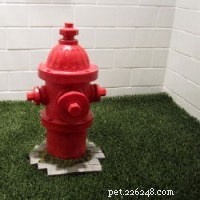
Wanneer je een plekje voor een potje binnenshuis kiest, is het eerste waar je rekening mee wilt houden dat je met de geur moet leven.
Vanwege ruimtebeperkingen is dit niet altijd mogelijk, maar u moet proberen plaatsen zoals slaapkamers, ruimtes waar kinderen spelen of waar u voedsel klaarmaakt of bewaart, te vermijden. Dit laat niet veel opties over!
Ideale plekken zijn elke weinig gebruikte kamer:een logeerkamer, de wasruimte of een weinig gebruikte badkamer.
Een andere overweging is het oppervlak waarop u de badkamer van uw hond plaatst. Bij gebruik van honden binnenshuis bestaat altijd het risico op ongelukken en ongelukken.
Dus als je kunt, plaats de badkamer van je puppy dan op een tegel- of linoleumvloer. Of als het in een ruimte met vloerbedekking moet zijn, leg dan een plastic zeil onder het toilet om de vloer te beschermen en het schoonmaken te vergemakkelijken.
Er zijn veel opties om uit te kiezen om als binnenpotje te gebruiken. Grasbakken, kattenbakken, sommige nieuwe hebben zelfs een afvoer die het afval opvangt in opslagtanks... de lijst is nu bijna eindeloos.
Dus welke moet je kiezen?
Persoonlijk train ik mijn honden altijd om buiten zindelijk te worden en voorzie ze niet van een permanent binnentoilet.
Daarom heb ik nooit grasmatten of kattenbakken overwogen, maar heb ik ervoor gekozen om papier en puppy-pads te gebruiken als ik ze langer alleen thuis moet laten dan ze hun blaas kunnen vasthouden.
Maar als u een keuze moet maken:Wat zijn de voor- en nadelen van elk?
[amazonfields=”B01MPWFYZA” value=”thumb” image_size=”large” tracking_id=”labradortraininghq-20″ image_class=”ais200fr”] Puppy-pads zijn zeer absorberend en kunnen in een bak met opstaande randen worden geplaatst, waardoor morsen wordt verminderd en het opruimen relatief eenvoudig wordt.
Ze zijn vaak doordrenkt van een geur om een puppy aan te trekken om ze te elimineren, zodat ze kunnen helpen het zindelijkheidstrainingsproces een beetje te versnellen. Ze zien er ook beter uit in huis dan een ruimte die (een beetje) bedekt is met papier.
Het nadeel is dat ze niet zo'n groot gebied bestrijken als papier kan en ik heb verhalen gehoord over honden die het leuk vinden om ze in stukken te versnipperen, maar dit geldt voor de meeste dingen, denk ik!

Papier is erg goedkoop en als je oude kranten gebruikt, is het bijna gratis! U kunt dus tegen zeer lage kosten een groot gebied bestrijken terwijl uw puppy jong en onervaren is.
Vaak loopt urine echter van het papier af voordat het erin trekt, waardoor morsen vaker voorkomt en opruimen lastiger is. Ook kunnen we gemakkelijker door papier naar de vloer eronder dringen, hoewel je desgewenst een bakje met puppy-pads kunt gebruiken.
Ten slotte is het voor uw puppy heel gemakkelijk om het papier te verscheuren en uit te spreiden op plekken waar een schrijfblok meer ingesloten is als het in een bakje wordt gestoken.
[amazonfields=”B00G7RMCHO” value=”thumb” image_size=”large” tracking_id=”labradortraininghq-20″ image_class=”ais200fr”] Een kattenbak is gemakkelijk schoon te maken, het zeer absorberende kattenbakvulling absorbeert het afval en de hoge zijkanten van de bak zorgen ervoor dat alles binnen blijft. Het ziet er ook beter uit dan een stapel kranten.
Maar de grootste problemen met zwerfvuil zijn dat sommige honden het als een tussendoortje zien. Het kan uit de bak worden gelopen en door het huis worden getrapt als het aan zijn pootjes vastzit, en god verhoede dat je een hond hebt die zijn uitwerpselen probeert te begraven!
[amazonfields=”B002DCWA4C” value=”thumb” image=”2″ image_size=”large” tracking_id=”labradortraininghq-20″ image_class=”ais200fl”] Grasmatten zijn verkrijgbaar met echte grasmat of synthetische opties.
Ze werken goed omdat ze er zo anders uitzien dan de omringende vloer dat een puppy het gemakkelijk kan onderscheiden als een potje, je hond een zacht, grasachtig gevoel onder zijn voeten krijgt en ze er goed in slagen alles binnen de perken te houden.
Het nadeel is dat ze de duurste van de beschikbare opties zijn en dat sommige honden de gewoonte ontwikkelen om in de grasmat te graven en te kauwen, net zoals ze zouden doen met een stukje gras buiten.
Ik raad aan om kranten te gebruiken bij een heel jonge puppy, opgesloten in een eenpersoonskamer met een gemakkelijk schoon te maken vloer.
Zodra uw puppy eraan gewend is om op het papier te gaan, knipt u het bedekte gebied af tot slechts een paar vellen, plaatst u puppy-pads in een bakje bovenop het papier en moedigt u uw puppy aan om dit te gebruiken.
Papier is zo goedkoop dat je het in overvloed kunt gebruiken bij een nieuwe pup totdat hij tenminste half getraind is, en dan kunt overstappen op puppy-pads, zodat het schoonmaken eenvoudiger wordt.
Als je met je zeer jonge puppy alleen een plekje binnenshuis hoeft te gebruiken totdat hij volwassen is, wat controle over de blaas moet leren en dan uitsluitend de buitenkant moet gebruiken, zou ik nooit een kunstgrasbak of -bak overwegen.
Maar als u van plan bent een binnenbadkamer langdurig te gebruiken, kunt u grasbakken, kattenbakken of zelfs een van de modernere en creatievere binnentoiletten overwegen.
Er zijn een aantal moderne hondentoiletten beschikbaar die slechts wekelijks schoongemaakt hoeven te worden, sommige die geurtjes elimineren en veel die er beter uitzien dan papier of puppy-pads als een permanent onderdeel van een huis, dus misschien wil je een aantal van deze opties onderzoeken.
Er zijn vier veelgebruikte en aanbevolen methoden waaruit u kunt kiezen, hoewel de realiteit is dat u vrijwel zeker een combinatie van twee of meer zult gebruiken.
Deze methoden zijn:
In de rest van deze handleiding zal ik verwijzen naar elk van deze vier methoden en wanneer u ze zou moeten of kunnen gebruiken.
Om er zeker van te zijn dat je een goed begrip hebt van wat elke methode is en wat ze inhouden, ga ik van elke methode een korte samenvatting geven.
Ik zal ook linken naar meer gedetailleerde artikelen die ik over elke methode heb geschreven, voor degenen die meer gedetailleerd inzicht willen.
 © Depositphotos.com / agencyby
 Papiertraining is de meest bekende en meest gebruikte methode voor huistraining over de hele wereld.
Hier is een korte samenvatting van de techniek:
Beschrijving: Met papiertraining leert u uw puppy binnenshuis naar het toilet te gaan, op een groot stuk krantenpapier of op voorbehandelde puppy-pads, waardoor een puppy wordt aangemoedigd de ruimte als toilet te gebruiken.
Als u eenmaal gewend bent aan het gebruik van het papier of de blokken, knipt u langzaam het bedekte gebied af totdat ze betrouwbaar slechts een paar vellen gebruiken en nooit meer missen.
Vervolgens verplaatst u het papier langzaam naar de buitenkant waar een ander setje wordt geplaatst en begint u uw puppy aan te moedigen alleen naar buiten te gaan, voordat u de papieren binnenin volledig verwijdert. Op dit punt hebben ze de overstap gemaakt.
Een goede tip bij papiertraining is dat wanneer u vervuild papier opruimt, u één stuk achterhoudt en dit als middelste laag van het nieuwe papier plaatst.
Puppypads hebben een geur die een puppy aantrekt, papier niet.
Maar door een stukje licht vervuild papier achter te houden met de geur van de urine van uw puppy, krijgt u hetzelfde effect als dat u uw puppy ertoe aanzet om te elimineren waar u maar wilt.
Effectiviteit: Op een schaal van 1 tot 5 geef ik het een 3.
Het kan niet hoger scoren omdat je ze traint om binnen naar het toilet te gaan voordat je ze opnieuw traint om dat niet te doen! Dit is verwarrend en zorgt ervoor dat het leerproces langer duurt.
Het leidt er ook toe dat fouten (binnen op het potje zetten) veel later in het leven van een puppy worden gemaakt in vergelijking met de andere methoden, vooral als hij papier ziet liggen dat is blijven liggen.
Meest geschikt voor: Ofwel mensen die voor langere tijd een plekje in de binnenbadkamer zullen hebben, ofwel mensen die geen bench gebruiken voor training, maar zich er niet toe kunnen verplichten om voortdurend toezicht te houden op hun puppy als hij binnenshuis is.
Maar het is ook een goed reserveplan dat iedereen kan gebruiken als ze hun puppy langer alleen moeten laten dan verwacht kan worden dat ze hun blaas moeten vasthouden.
Gebruiksgemak: Op een schaal van 1 tot 5 zeker een 5.
Het is een zeer eenvoudige methode om te gebruiken, die de minste inspanning van u vergt in vergelijking met welke andere techniek dan ook.
Maar het resulteert wel in meer fouten van uw puppy tot op latere leeftijd. U kunt in het begin dus passiever en minder betrokken zijn, maar zult later in het leven van uw puppy meer schoonmaakwerk moeten doen dan bij andere methoden.
Benodigde uitrusting: Niets dan stapels oude kranten! Een zeer kosteneffectieve methode.
Meer informatie: Voor een gedetailleerde bespreking van papiertraining, voor- en nadelen en enkele tips van experts, raadpleegt u het volgende artikel:Hoe u uw puppy of hond op een gemakkelijke manier met papier kunt trainen
[amazon field=”B001DRY8Z2″ value=”thumb” image_size=”large” tracking_id=”labradortraininghq-20″ image_class=”ais200fl”] Het gebruik van een krat is de meest effectieve en eenvoudigste manier om het zindelijkheidstrainingsproces te versnellen.
Beschrijving: De methode maakt gebruik van het feit dat honden een natuurlijk instinct hebben om de ruimte waar ze eten en slapen niet te bevuilen.
De sleutel hiervoor is dat je de bench net groot genoeg maakt om in te staan, gemakkelijk om te draaien en uitgestrekt neer te leggen, maar niet groter.
Een puppy of hond zal hem dan zo lang mogelijk ‘vasthouden’ om te voorkomen dat hij zijn behoefte doet, en moet er dan in gaan liggen.
Een groot voordeel hiervan is dat een puppy al op zeer jonge leeftijd leert dat hij, alleen omdat hij de drang heeft om te plassen of te poepen, deze niet hoeft vast te houden en dat hij deze ook daadwerkelijk kan vasthouden. Bij andere methoden leert een puppy dit feit niet terwijl hij nog zo jong is.
U moet uw puppy echter niet voortdurend in de bench zetten, dit zou wreed zijn.
Je zet ze alleen in een krat als je ze niet kunt bekijken, als je bezig bent in huis of misschien een korte tijd weg bent van huis. De rest van de tijd let je op ze en neem je ze regelmatig mee naar buiten om ze goede gewoontes aan te leren.
Effectiviteit: Op een schaal van 1 tot 5 geef ik het een 5
Ik zeg dat het de meest effectieve methode is die ik ken of waar ik ooit over heb gelezen. Puppy's leren sneller het juiste gedrag dan met welke andere techniek dan ook en er zijn minder fouten (en minder schoonmaken!) onderweg.
Meest geschikt voor: Iedereen! Ik raad ten zeerste aan om tijdens de zindelijkheidstraining een bench te gebruiken, omdat deze zo effectief is.
Gebruiksgemak: Op een schaal van 1 tot 5 zou ik zeggen een 3.
Het is gemakkelijker dan constant toezicht, moeilijker dan papieren training. Dit komt omdat u uw puppy eerst in een bench moet trainen voordat u een bench kunt gebruiken voor zindelijkheidstraining, wat tijd en moeite kost.
Klik hier voor mijn gratis en gedetailleerde gids voor het trainen van uw puppy in de bench.
Benodigde uitrusting: Een geschikte krat. Ik heb een gids om u te helpen bij het selecteren van de juiste maat en het juiste type. Deze kunt u lezen door hier te klikken.
Meer informatie: Om een gedetailleerde discussie over het gebruik van een bench voor zindelijkheidstraining te lezen, lees:Hoe gebruik je een bench om een puppy zindelijk te maken?
In dit artikel wordt besproken waarom de methode zo effectief is, hoe hij gebruik maakt van drie van de natuurlijke instincten van uw puppy, hoe hij een aantal voor- en nadelen tegen elkaar afweegt en nog veel meer.
 © Depositphotos.com / agencyby
 Beschrijving: Het is zoals het klinkt:u brengt al uw tijd door met uw puppy en houdt voortdurend toezicht op hem.
Elke keer dat je merkt dat ze op het punt staan om naar het potje te gaan, schep je ze op en breng je ze naar hun badkamerplek.
Effectiviteit: Op een schaal van 1 tot 5 geef ik het voorlopig een 3.
Het kan zelfs hoger of lager scoren, afhankelijk van hoe toegewijd u bent en hoe succesvol u bent in het begeleiden van uw puppy.
Maar ik heb het een 3 gegeven, want hoe goed je bedoelingen ook zijn, hoe bewust je ook bent van de taak van het toezicht, je zult je waakzaamheid laten verslappen en je puppy zal in staat zijn om weg te sluipen om fouten te maken.
Om deze reden is het niet zo effectief als krattraining en zal het langer duren, wat zeker zal resulteren in meer ‘ongelukken’.
Meest geschikt voor: Mensen die tegen elke vorm van opsluiting zijn en thuis kunnen blijven om elke dag de hele dag op hun puppy te passen. Meestal mensen die thuiswerken en gepensioneerden.
Maar deze methode maakt ook deel uit van elk zindelijkheidsplan, of je er nu andere methoden naast gebruikt of niet. Dit komt omdat wanneer een puppy vrij in huis is, hij MOET nauwlettend in de gaten worden gehouden om fouten te voorkomen.
Ease of use: On a scale of 1 to 5, I give it a 2.
It scores low as it requires a lot of input from you as the owner. You need to concentrate on your puppy at all times, ready to intervene and correct them any time they’re about to potty where they shouldn’t.
It is quite draining never being able to take your eye of your puppy.
Equipment needed: None. Niets. Not a crate, newspapers, puppy pads or anything. The cheapest of all the methods…unless you put a price on your time.
Further Info: For more information on the constant supervision technique, please read the following article:House Training WITHOUT A Crate:Constant Supervision
 © Depositphotos.com / andresr
 This is a little used technique, and at first may sound a little silly. But it is highly effective.
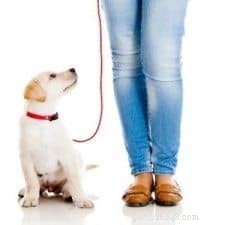
Beschrijving: This technique calls for you to tether your puppy to you by leash and have them follow you wherever you go when inside your home.
This way they’re never more than a few feet away and have no chance to sneak off unnoticed to potty where they shouldn’t.
You will notice and be able to intervene and correct every possible mistake, taking them outside every time they need to relieve themselves.
Effectiveness: On a scale of 1 to 5, I’d say it’s a 5.
Used correctly, the opportunity for your puppy to make mistakes is completely removed so every single time they need to visit their bathroom spot is a training opportunity you will take advantage of and no mistake goes uncorrected.
Best suited to: People who spend all their time at home with their puppy and would also enjoy literally being tied to their pup all day.
It’s also a good method to throw into the mix for people who’ve found difficulty with ‘constant supervision’ and allow their puppy to sneak off and have accidents in the home, helping them to get better results.
Ease of use: On a scale of 1 to 5, I’d say a 4.
It’s easier than constant supervision as your puppy is attached so you can relax a little in comparison.
It’s easier than using a crate because you don’t have to crate train your puppy. But it’s not as easy as paper training which is very hands off for an owner.
Equipment needed: A quick release collar and a house line / leash.
Further Info: for a detailed discussion of this technique, the benefits, downside, and many more tips, please see my article:Umbilical Cord House Training:What is It? How Does It Work?
I use and recommend a mixture of crate training, constant supervision and paper training.
I primarily use crate training as I firmly believe it’s the most effective method and I’m also a strong believer in the idea that every dog deserves to be crate trained to enjoy the continuous benefits it offers throughout their life.
I use constant supervision extensively because when a puppy is outside of the crate you have to watch them diligently to avoid puppy mistakes.
I use paper training while my puppies have almost zero bladder control until the age of 10 or 11 weeks, and later in life when I can’t avoid leaving them home alone for longer than they can be expected to hold their bladder.
Admittedly this is somewhat going against my advice because I always recommend to avoid paper training if possible.
It encourages or allows your puppy to toilet inside the home, before then training them not to do so. It’s saying it’s OK, before turning full circle and saying that it’s not.
This is confusing to your puppy and harmful to our house training efforts. (Unless you’re going to have a permanent indoor bathroom spot of course, then this method is perfect.)
But even though I recommend against it, using paper training ever so occasionally as a fall back plan works well for me.
I explain more fully why and when I use paper training in later sections of this article on ‘House Training For Full Time Workers ‘, and ‘A Note On Puppies Between 8 And 12 Weeks ‘
 © Depositphotos.com / andresr
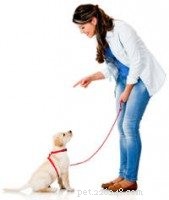
 Though not essential, it’s extremely useful to train your dog to eliminate on command.
When you’re in a hurry and need to leave in the morning, or it’s right before bed time, these are times you will wish your dog would eliminate on command rather than you having to patiently wait for them to do their job.
Most dogs love being outside and will use any excuse to get out there and stay there.
So it’s of benefit if you can clearly tell them you’re going outside to toilet only and for nothing else, that there’s no chance of exercise or play. If they don’t potty, they’re coming straight back in.
You do this by using a cue word and walking them on leash to their potty spot, not allowing them to do anything else and if they do not potty, taking them back inside and trying again in a few minutes.
Because a full bladder or bowel is uncomfortable, dogs are happy to relieve themselves, but some may try to hold it if they think they can get to stay outside and sniff around a while.
By not allowing this and associating it with a consistent command, it will only take a few short weeks for them to learn your chosen command means a bathroom break only and that if they don’t go, they’re coming straight back inside uncomfortably full.
If this is something you’d like to train, it’s important that you choose the words to use before you start the training and make sure everybody uses the same words consistently.
If people use different words, your dog will get confused.
So pick a command like ‘toilet time ‘ that you will only use when you’re taking them to the bathroom and you will not allow them to do anything else.
You’ll have a different word like ‘walkies ‘ for other more fun times outside and your dog will eventually learn the difference and set their expectations of their time outside accordingly.
Once outside you can use another command like ‘potty’ or ‘do your job’ to ask them to do their business.
For the first weeks you should wait for them to start doing their business and then use the word ‘potty’ to build an association. And praise them afterwards with ‘good potty’. This will slowly teach them the command.
Eventually your dog will learn ‘toilet time’ means a quick bathroom break only, and ‘potty’ is you asking them to go.
OPMERKING: For a very good guide on training to eliminate on command from the ‘Whole Dog Journal’, please click here.
A quick word of caution: Don’t use a word for your elimination command that gets used at other times. For instance, many people use the words ‘hurry up!’, but if you say this to your spouse when heading late out the door, this could get very messy if your dog hears and reacts.
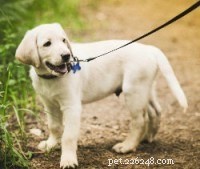
When your puppy’s very young it’s easy enough for you to scoop them up and carry them to their bathroom spot. And this is fine for the first couple of weeks while they have no bladder control and will perform their business very quickly.
But once they start to learn some bladder control, if you take them to potty without them being on leash, as soon as they hit the outside there’s all the sights, sounds and smells that can take over their inquisitive minds.
They easily forget what they’ve gone outside for and will romp and play in your yard instead, before going back inside still full. And some dogs even learn to actively hold their bladder just so they can stay outside to explore for longer.
So it’s in your best interests to lead them on leash to their bathroom spot and keep them there until they complete the job in hand.
Before you can do this you need to first get your puppy used to wearing a collar and leash. To help with this I’ve written a detailed guide that you can read by clicking here:How To Get Your Puppy Used To A Collar And Leash
Start this process at 10 weeks, and always lead them on leash from the 11th or 12th week. You may regret it with lots of time waiting outside if you don’t!
Like everything in life, house training runs smoother if you have everything ready before you start, hopefully before you even bring your puppy home. Although it’s never too late of course!
To help make sure you’re ready, here’s a checklist to cross off and make sure you have everything prepared. Have you:
With all this ready and in place, you’re now ready to begin house training your puppy.
Dogs thrive when living to schedules and routine, doing best when they have set times for eating, going to toilet, exercise, training and play.
And when it comes to house training, you’re going to love schedules and routine too!
If you feed your puppy at random times throughout the day, they’ll need to defecate at random times throughout the day.
They won’t fall into any predictable schedule and your life will be that much harder.
But because the passage of food through their digestive system stays roughly the same, if you feed your puppy at the same times every day they will need to defecate at roughly the same times every day.
Furthermore, because puppy’s learn through repetition, by taking yours out to potty at the same times every day, their body learns to expect and follow this schedule, training your puppy to toilet at the times you’d like them to.
When you know the times your puppy needs to eliminate you can have them at the right spot at the right time with a far greater success rate than if you didn’t follow a routine.
This results in fewer mistakes, more opportunities to praise your puppy for going in the right place and so speeds up their learning.
Depending on their age a puppy will need to poop 3 to 6 times a day, and wee many more times than that. Can these times be predicted? Mostly they can.
When a puppy needs to potty depends on when they last ate, drank and their recent activities. Mostly they need to go:
But a puppy also needs to go many times per day regardless of recent activities, so you should also take your puppy to their bathroom spot on a consistent schedule such as the following:
This is only a guideline because all puppy’s are different. And on that note…
Not all puppies are the same. Some will need to wee within 2 minutes of drinking, others after 20 minutes. Some will need a bathroom break within 2 minutes of waking, others 15 minutes later.
This means there isn’t a ‘one-size-fits-all’ schedule I can give that’s suitable for every puppy and owner. You have to determine your puppies own natural tendencies and create a schedule to suit.
This may sound like a lot of work but it really isn’t once you get in to the routine. And besides:
Once you’ve determined your puppy’s natural rhythms, you can be at the bathroom spot at the correct times more accurately which is of huge benefit to both you and your puppy, so it’s highly worth doing!
But if you fear living to strict schedules is too hard to do…don’t fear! You don’t have to stick to them 100% of the time.
The more you can stick to schedules and routines, the smoother and faster the process will be. But you can stray from the path when necessary and still find success, it will just take a little longer.
Just don’t be overly strict and hard on yourself because we all have a life to live outside of house training!
So let’s go through the 5 steps of creating your puppy’s schedule.
 © Depositphotos.com / zzve
 Follow this 5-step process to create a schedule that works with your puppy’s natural rhythms and fits with your lifestyle and commitments.
Keeping and following a written schedule may seem odd or a bit excessive, I’m sure you’ve not seen many people bother with it?
But I promise you it’s not much work, after a couple of days practice it becomes a simple routine, the time it takes is negligible and the results are phenomenal.
Depending on how old they are, your puppy needs feeding between 2 and 4 times a day. Here’s a guide to how often and when you should feed them:
You should feed your puppy 4 times a day until 12 weeks old.
To achieve this you need to feed them every 4 hours and you should make it the same time every day, fitting it into a schedule that’s best for you.
A good routine would be to feed ‘breakfast’ when you first get up, at 7:30AM, then at 11:30AM, 3:30PM and 7:30PM.
You should feed your puppy 3 times a day when 12 to 26 weeks old.
The timings for 3 feeds a day would be roughly every 6 hours:7:30AM, 1:30PM and 7:30PM.
From 26 weeks old and onwards, feed your puppy just two times a day
For 2 meals a day you need to space them out 8 to 12 hours apart.
What works for me is shortly after I get up at 7:30 and when we have our evening meal between 6:15PM and 6:45PM.
Availability Of Water:
You should make sure fresh water is always available but because drinking too much or too little can be a sign of health problems, you do need to monitor their water intake.
© Depositphotos.com / Madrabothair Physical activity has a direct influence on a puppy’s potty schedule because it ‘helps things move along’ for want of a better expression.
Physical activity often leads to a puppy needing to potty very soon after. So to encourage predictable potty times for your puppy, you want to schedule their exercise and play.
This will help your puppy’s mind and body to slip into a routine that will help you both with the house training process.
Deciding when to exercise, train and play with your puppy is entirely up to you. You should fit it around your lifestyle and commitments, but try to make it the same times each day if you can.
If you’ve followed the guide so far, you’ve now gathered all the information you need to design your puppy’s house training schedule.
Enter all the following details into a single column in an excel spreadsheet, or write them down as a day schedule with a pen and paper:
After writing down this schedule, tick off each task as you go through the day with your puppy.
This way you will always know what needs to be done and when, and there will be no confusion about whether someone else in the house fed, exercised or took the puppy to the loo.
If it’s not crossed off the schedule, it hasn’t been done.
 © Depositphotos.com / Gajus-Images
 Alongside the schedule you’ve designed, add some columns where you can take notes of your puppy’s bladder and bowel movements, as well as their daily activities.
You do this because it’s important information you can use to design an ever more accurate schedule going forward. (I discuss this further in step 5 below.)
The things you should write in your diary are:
Basically, note down anything food, activity, accident or potty related so you can look for patterns to help you in the next step.
Look over any ‘accidents’ your puppy had and you noted during the day.
You should be able to pick up on any patterns and adjust your own behavior to avoid mistakes in future.
Was puppy left alone and peed in the living room while you made breakfast? – You need to increase supervision or make doubly sure you crate them when you’re busy.
Puppy should never be left alone unsupervised, learn from this mistake.
Or maybe puppy peed in the crate after an hour? – You left them crated longer than they can hold their bladder, or didn’t empty them before crating.
Learn from this mistake.
Look over how long they took to potty after being taken for a scheduled potty break
Did you catch them ‘in the act’ 3 times in a single day? Well done for watching them closely enough.
However, if they tried to go 3 times in the home, you’ve learnt that you likely aren’t taking them to empty themselves often enough. So increase the frequency.
Or perhaps the opposite happened and you noted that 3 times in the day you took puppy for a scheduled bathroom break, they didn’t go and you returned them inside for 15 minutes before trying again?
This shows your puppy is maturing fast, doesn’t have to potty as often as you thought and can last longer between potty visits than you’re allowing.
Therefore you should stretch out the time between visits by 10 to 15 minutes for the following day.
Look over how long after eating they pooped
If you see puppy didn’t potty for 20, 15, 20 and 20 minutes after their meals of the day, with this information you learn it’s pointless to take them to their potty spot until 15 minutes after they finish eating.
Some puppy’s go 2 minutes after eating, some after half an hour. This is how you find out.
By writing out the schedule as in step 3, you should never forget to feed, train or take your puppy to potty. If it’s not marked off on the schedule, it’s not been done.
And by using the schedule as a diary as in step 5, you get feedback on how you and your puppy are performing, and are armed with the necessary info to make changes to your schedule over time.
This helps you to truly match your puppy’s natural rhythms and their maturing and changing body.
You, your puppy and their needs all stay in sync and house training becomes that much easier.
 © Depositphotos.com / ccaetano
 For ease of use, I recommend simply keeping a written diary with good old-fashioned pen and paper.
We’re all in the electronic age surrounded by smart phones and i-Pads, but this is simply too much hassle and will likely lead to you not bothering if you have to power up a device and so on to make an entry.
Just make a spreadsheet in excel and print it out, or simply buy some lined paper.
Keep it somewhere you can always see and know where it is, alongside a pen or pencil and write entries in it as you watch your puppy throughout the day.
Next to your house phone, pinned to the fridge or by the exit to your puppy’s bathroom spot is a good place to keep it, but put it wherever is best for you.
When you first get your puppy home at 8 weeks, they can barely control their bodily functions so keeping a diary isn’t perhaps that helpful but I still recommend you do so, to get yourself into the habit.
I would recommend keeping a diary every single day until you’ve determined a definite pattern and have spotted their individual ways. Up until they’re 14 weeks old is a good target.
After this, continuing with a diary every day is the best advice, although keeping one for 3 consecutive days each week will be sufficient for you to pick up on any changes as they mature.
Once your puppy is 5 to 6 months old, they will have sufficient bladder control and experience to make a schedule and diary unnecessary.
Just make sure they get access to the outside at least once every 3 hours and all will be fine.
I discussed earlier how a puppy will need regular visits to their bathroom spot, something like every 30 minutes at 8 weeks old, every 45 minutes at 10 weeks old and so on.
But every puppy is different and their progress in having longer time between needed toilet breaks will vary too.
Although your puppy’s natural progression reflects in your diary and your schedule will adjust to suit, you should purposely try to increase the time between breaks yourself if it doesn’t happen naturally.
If you don’t see a natural increase of time between eliminations, add 5 minutes to the scheduled times every 3 or 4 days to stretch out how long they can last.
If they can’t make the time, peg it back 5 minutes and try to increase the time again in a further 3 or 4 days.
You do this because as a puppy grows, the size of their bowel and bladder increases, so they will be able to hold more for longer and you want to take advantage of this.
This is also teaching them necessary bladder and bowel control.
Your aim is to have them needing a toilet break only every 4 hours or so by the time they’re 5 to 6 months old.
In an ideal world, when you take your puppy to potty they will empty themselves completely and instantly, with no delay and not holding any back to release as soon as they’re back in your home.
There are a few things you can do and some that you certainly shouldn’t that will help you to achieve this goal.
Use your cue word before you take them: By using your chosen cue word every time before you take them to potty, your puppy will learn what the trip is about and what they must do. This eventually leads to faster results as they know what is expected of them.
Lead your puppy to the bathroom spot on leash: This gives you the ability to keep your puppy at the bathroom spot and prevent them wandering off, getting distracted and forgetting what they are there for.
This isn’t always possible if you catch them in the act and must hurry, but for scheduled bathroom visits you should always aim to take them on leash.
Make sure you stay with them at their bathroom spot: If you have them on leash, then of course you will be. But if you don’t have them on leash, make sure you stay with them because the separation will just make your puppy anxious to get back with you and they will not potty.
Once at the bathroom spot, don’t say or do anything until they start to eliminate: Puppy’s get distracted very easily and any attention can take their mind off the job in hand. Be boring, uninteresting, and just hold your puppy’s leash until they start to go.
When they start to go, say your chosen cue word in a soft warm voice. Otherwise remain silently still until they’re finished: You need to associate your cue word with the act, but if you say it too loud and brightly, it may distract them and they won’t finish.
Similarly, any other movement or sounds like praising them too early or shuffling your feet might distract them and they might not finish what they’ve started.
If they don’t finish and completely empty themselves, they may finish inside your home and even if they don’t they will not be able to make it to the next scheduled bathroom break so an accident in the home is more likely.
When you’re sure they’ve finished, praise them like mad and reward them: You should heartily praise your puppy for going in the right place, then allow them a few minutes off leash, a couple of minutes play or a tiny (and I mean tiny!) but tasty food treat.
The praise and reward make going to potty a happy experience, tells them they’ve done right and helps them to learn more quickly.
Mix up the reward between play, time off leash and a food reward to keep them guessing, but keep the food rewards to a minimum as what goes in must come out and random feeding promotes random elimination times!
 © Depositphotos.com / c-foto
 First of all, make sure you’ve spent enough time out there.
Many people pop out, stand for 1 minute and then come back in. This isn’t enough as a puppy can only go when they need to go and they may not be ready.
Some people recommend to stay out there for 10, 15, 20 minutes, whatever it takes until they go, then praise profusely when they do. Although this advice may be sound, personally I’d rather not.
I recommend you give them 3 to 5 minutes, saying your cue word every 30 seconds or so but otherwise standing silently still just holding their leash so they cannot wander off.
If after 3 to 5 minutes they haven’t been to toilet, bring them back inside your home and then:
If using constant supervision: Set them down in your home and continue watching them to intervene in case they make moves to go in the wrong place. Take them back to their bathroom spot in 10 minutes or so.
If using a crate for house training: Pop them back in the crate and leave them for 10 minutes. Then take them back to their bathroom spot.
If using umbilical cord training: Take them back into your home and watch your puppy carefully while they’re tethered to you by leash. Take them to their bathroom spot after 10 minutes.
If paper training: If they are confined to the area that’s papered, do nothing. If not, take them away from their bathroom spot and watch them for 10 minutes before returning them to their bathroom spot.
In all cases, just remember you’ve brought them back in with a full bladder so you mustn’t take your eye off them if free in your home.
And if crate training, do not leave them in the crate too long else they may be forced to soil in there. Prevent this at all costs.
Rinse and repeat the visits to and fro like this until they do potty, then follow the next sections advice.
Between scheduled bathroom visits you should do two things:Allow some supervised free time in your home, and use your chosen house training method.
 © Depositphotos.com / ikostudio
 After returning from the bathroom spot you should grant your puppy some free time in the room where you spend most of your time, up until 20 to 25 minutes before their next scheduled bathroom visit.
By free time I mean time outside of their crate, or off leash, or out of their confinement area. Time free to roam, explore and live life.
When 10 weeks old they may need to toilet every 30 minutes, so they only get 5 to 10 minutes free time. When 12 weeks old, they may need to toilet every hour so they can get 35 to 40 minutes free time.
You allow this free time because you are of course working toward a time when they will always be free and trusted unsupervised.
To get there they need the experience, to get used to being free in your home and begin seeing it as a place they need to keep clean.
They also need social interaction and life experiences.
The best time to grant this free time is right after a bathroom visit so you’re fairly sure they’re empty and are far less likely to make a toilet mistake in your home.
The important thing to remember is:
When your puppy is free in your home in this way, you must know exactly where they are at all times and be watching them like a hawk, ready to intervene if they look like they’re about to potty where they shouldn’t.
But what are the signs a puppy is about to potty?
When supervising your puppy’s free time, the signs you need to look out for that they need to eliminate are:
The minute you see any of these signs you should take your puppy to their bathroom spot immediately. There may well be some false alarms, but better safe than sorry.
Most puppies will display one or more of these pre-elimination behaviors, but no two puppies are the same so you need to be observant and learn your own puppy’s pre-toilet rituals.
Carefully watch them and you should soon notice what body language means a wee or a poop is imminent. There will be recognizable signs.
 © Depositphotos.com / AOosthuizen
 Once your puppy has enjoyed some free time and it’s nearing 20 to 25 minutes before a scheduled potty visit, you need to switch to using your chosen house training method.
We do this because the time is fast approaching when mistakes are most likely to be made. So we might crate our puppy, or attach a leash for umbilical cord training if we’re using these techniques.
Remember, all free time is closely supervised anyway so you’re ready to react if they’re about to ‘make a mistake’, So..
If using constant supervision: Carry on as you are. Watch your puppy and be ready to react if they look like they’re about to potty. Then at their scheduled potty time, attach a leash and lead them to their bathroom spot.
If using a crate for house training: Encourage your puppy into their crate and close the door, leaving them there until their scheduled potty time and then release them, instantly attaching a leash and leading them to their bathroom spot.
If using umbilical cord training: Attach a leash and tether your puppy to you, ready to react if they make moves to eliminate. Take them to their bathroom spot at the scheduled time.
If paper training: Take your puppy to their confinement area where their papered bathroom spot is and supervise them, ready to intervene if they make moves to potty away from the paper. Encourage them to potty at their scheduled time if they don’t do so naturally.
If you catch your puppy pottying in the wrong spot, you should simply clap your hands and say a firm ‘NO!’. You don’t want to shock and scare them, just loud enough to startle and get their attention.
It’s very important you DO NOT scare them as they may become afraid to potty in front of you. Not good when you need to be there to encourage them for doing it in the right place.
When you clap and say ‘NO!’, some puppies will stop what they’re doing, but others may not.
If they do, you can pick them up and carry them, or take them by the collar and gently lead them to their bathroom spot, then encourage them to finish where they should.
But if your puppy doesn’t stop mid-flow, my advice is to accept the fact you’re too late, you didn’t recognize the signs they needed to potty (or weren’t watching them closely enough) and you should let them finish and then clean it up.
Many people recommend to pick your puppy up and take them outside even if they don’t stop. But to me this seems foolish.
Instead of a little pile or puddle, you then have a long line of wee or poop from where you caught them all the way to the bathroom spot that you then have to deep clean instead. To me this isn’t worth the extra cleaning effort.
 © Depositphotos.com / adogslifephoto
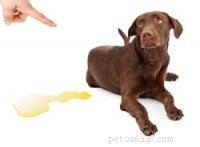
 There is nothing you can do.
You’ve missed the opportunity to correct your puppy and anything you do now your puppy will be unable to connect to the act of pottying in the wrong place.
If you get angry, shout at or punish them in any way, they might ‘look guilty’ trying to appease you, but they will have no idea what it is that’s driven you mad. They’re just trying to calm the situation.
And what sometimes happens is a puppy learns that poo on the floor is what you’re mad about, causing them to slink away to poo where it’s hidden, or worse they may even eat it so you don’t see it and get mad.
So if you stumble on a mess you didn’t catch them make, simply move them away and deep clean the area.
Then think how they were able to make such a mistake and tweak your plans so it cannot happen again. But any corrections or punishment now will be futile.
This advice applies not just to full-time workers, but also if you must occasionally leave your puppy home alone for a few hours.
Most importantly, follow all the advice in this guide so far for the times that you are home.
Supervise them, correct any mistakes, set feeding and elimination schedules and everything else I have advised. Then, what follows are your choices of what you can do to cover when you aren’t at home.
First of all, if like me you use a crate, you simply cannot leave your puppy in the crate for many hours. They’ll be forced to potty in there after a very uncomfortable time trying to hold it for as long as they possibly can.
This is very unfair on your puppy and it will destroy the crates power as a house training tool if they lose the instinct to keep it clean.
Secondly, please do your best to enlist the help of a family member, friend, neighbor or hire a dog walker to periodically pop in to visit your puppy, take them to their bathroom spot, give them some social interaction and so on.
I understand this isn’t possible for all owners, but you should strive to achieve this if possible.
Having said that, what should you do about house training when you aren’t at home:
Throughout the many articles of this guide you will have read me advising against paper training unless you’re planning on a permanent indoor bathroom spot for your dog.
But I also freely admit to using paper training myself occasionally, for the unavoidable times I have to leave my puppy home alone for a few hours.
If you have to leave your puppy home alone for any reason, usually because you work, then paper training in your absence is the only thing you can do.
You then have two options available to you:Buy and use an exercise pen, or confine your puppy to a single, puppy-proofed room.
[amazon fields=”B003XU0B62″ value=”thumb” image_size=”large” tracking_id=”labradortraininghq-20″ image_class=”ais200fr”] An exercise pen is a confinement device that looks like a crate but is much larger and has no roof. They can have any number of panels, be square, hexagonal, octagonal, L-shaped…they’re very flexible (an example 8 sided pen is in the image to the right.)
You use it to confine your puppy so you know they’re safe, as is your home and belongings from their teeth.
They’re big enough for you to paper an area inside to use as a toilet, while leaving space where you can set up your dogs bed, a water bowl and some chew toys and so on away from where they have to potty.
Initially use less than half of the confinement area for your puppy’s bedding, toys and water bowl, then paper over the remaining floor space.
As they get used to pottying on paper, reduce the area covered one sheet at a time until just a small area remains covered.
Once you know your puppy can hold their bladder for longer than they have to be left alone, remove the paper altogether.
By 16 to 20 weeks, they should be able to last the 3 or 4 hours max they will be left alone and somebody comes to exercise them and allow a bathroom break.
OPMERKING: You should get your puppy used to an exercise pen by using the same techniques as crate training, so please refer to my guide to crate training puppies
[amazon fields=”B004RL1KPC” value=”thumb” image_size=”large” tracking_id=”labradortraininghq-20″ image_class=”ais200fl”] When I’ve had to leave a puppy alone, I confine them to a paper covered area of a puppy proofed room, with a puppy pad in a holder.
Between 8 and 12 weeks (when weeing seems spontaneous), my puppy spends a fair bit of time in there and I paper train them to use puppy pads.
Most recently, the room I used was basically our dining room, though it’s never used for that purpose and is essentially bare.
Our kitchen and dining room was separated by an arch where a door used to be, with tiled flooring, making it ideal.
I used a baby gate across the arch between the kitchen and dining room, and initially covered the dining area with paper, over time reducing it to just two sheets with the puppy pad holder on top.
The dining area is completely empty, with no furniture, nothing in there. So it’s as puppy proofed as can be. But a word of warning…
If you use this option and have any furniture or anything at all in the room, it’s likely it will be scratched and chewed! Skirting boards, the corners of furniture items, anything within reach is a potential target for teeth and claws.
My girlfriend works from home, we crate trained and we had no problem finding house sitters in an evening if we needed one, so we all but had things covered. But this is something you need to be mindful of.
So I recommend using an exercise pen if you’re going to leave your puppy alone often and there’s any chance of a room being damaged.
 © Depositphotos.com / feedough
 Regardless of the method of house training you choose, some form of confinement is almost always necessary, for the times when you really cannot watch your puppy.
And there will always be a time or two so it’s best to prepare in advance.
You may have an unexpected visitor or need to visit A&E in an emergency. Whatever the reason, there just WILL be times you cannot supervise your puppy.
If you’re using a crate, you have these times covered.
But if you’re against a crate for whatever reason and have chosen to exclusively use constant supervision or umbilical cord training, you will have to invest in an exercise pen or confine your puppy to a single room and use paper training.
The essence of house training is to prevent mistakes and praise your puppy heavily when they potty in the right place.
If you cannot watch your puppy, the chances of them making a mistake go through the roof.
So even if you choose to use a constant supervision method exclusively, you will still need to confine your puppy sometimes to a paper covered area just in case.
 © Depositphotos.com / domako
 You’ll likely find your 8 week old puppy has absolutely no bladder control. I mean literally none at all.
One minute they are trotting along, the next they are leaking. No warning signs for you, not even any warning signs for them. They just don’t know it’s going to happen themselves.
It’s not their fault, it’s just their immature bodies doing what they do.
During this time it’s foolish to allow them on your living room carpets for even a second.
I recommend setting up an exercise pen with the entire area papered, or do as I do and confine them to a room with the entire area papered.
Use this time to paper train them, to get them used to weeing on paper and gradually reduce the area because you will use this method if you ever have to leave them home alone during the next 4 or 5 months.
Some time between 8 and 12 weeks, your puppy will start to show some bladder control (usually 9 to 10 weeks) and will begin to show warning signs that they’re about to potty instead of instantaneously leaking. They will sniff, circle and so on as I mentioned before.
At this point you can now move on to using your chosen house training method.
I’m not saying when 8 weeks old you don’t house train them. Do! Start encouraging them to potty in the right place from the minute you get them home.
I’m just saying that it’s very hard when you have absolutely no warning for the first few days to a couple of weeks. Just don’t get mad at your puppy, it isn’t their fault and you should expect this.
A young puppy will not be able to last through the night without needing to potty. However, similar to humans a dog’s body slows down during the night and the need to toilet is severely reduced.
So the good news is, even at 8 weeks they will be able to last 4 or so hours and you will only need to wake once during the night.

Allow your puppy no food for 3 hours and no water for 2 hours before bed. Also, make sure to take them to their bathroom spot right before you go to bed so they can empty themselves.
Then set an alarm for 4 hours after their bed time when you must get up and take them to their bathroom spot. No excuses, you simply must do this.
If you find your puppy has soiled in this time, you should set the alarm for half an hour earlier the next night (3.5 hours). Repeat until you find you’re waking before they’ve had an accident.
After a few days of not having a night-time accident, set your alarm for 15 minutes later and increase the time by 15 minutes for each successful night they do not have an accident.
The time a puppy can last over night without needing to potty increases dramatically during their first few weeks so you’ll find this is OK to do.
If you find they make a mistake one night before you wake, set the alarm back half an hour, make sure they stay dry a few days and then increase 15 minutes nightly again.
Within a few short weeks you’ll find they can last a full 7 hours without needing a bathroom break.
And by using this schedule, you strike a good balance between a couple of inevitable accidents while stretching out the time at a good pace to lasting a full night.
It’s important that your puppy isn’t forced to eliminate in their crate as it can ruin their natural instinct to keep it clean, the very thing we take advantage of to help the house training process.
This is why I recommend if you find a mess you set the alarm for half an hour earlier, a reasonably big step back to where they’ve been successful at before.
If they soil their crate more than once in any given week, you may have to progress slower (add 15 minutes every 2 or 3 days), or perhaps sleep them in a papered exercise pen or their confinement room.
Maintaining their instinct to keep the crate clean is of utmost importance.
You should also consider consulting your vet to make sure it’s not a medical problem causing the mistakes.
When you take them out at night, say your chosen cue word, take them straight to their bathroom spot, praise them gently when they finish their business but do not reward them with anything else.
The last thing you want is to teach your puppy that during the night is a time for play or food treats!
This will come back to haunt you in a big way and result in noisy sleepless nights. You want your puppy to learn that night-time is for sleeping and for nothing else.
When the alarm goes off, collect them, take them to potty, praise with a simple, deadpan ‘Good potty! ‘ then silently take them back and return to sleep until the morning. Do nothing else.
No two puppies are the same. Some will be able to last the whole night without a potty break at 10 weeks (rarely), and some may not be able to at 15 weeks (also rarely).
But certainly by 16 weeks old your puppy will be able to last a 7 hour night without needing to potty if you do not feed them for 3 hours or provide water for 2 hours before bed time and allow them to empty themselves right before you lay down for the night.
 © Depositphotos.com / Nivens
 If you seem to be making little progress and your puppy is weeing and pooping randomly all the time, or just doesn’t seem to be developing bladder control, it could be due to medical reasons.
If you are feeding, exercising, training and playing with your puppy to a schedule, and when you look at your diary there seems to be no pattern to the times they need to potty, you should seek the advice of your vet.
Common ailments such as gastroenteritis, urinary tract infection and health issues affecting internal organs and the genitalia can lead to a dog needing to potty much more frequently, often leading to eliminating in the house.
Also, you should regularly check the firmness and consistency of their stools and if they’re too hard and dry, or soft and runny, there’s likely something wrong with their diet or a medical condition to blame. Again, seek the advice of your family vet.
You cannot successfully house train a puppy who is ill because their bodily functions will be too unpredictable. But of course if they’re ill, you want to have them back to good health anyway!
The simple answer is:‘When your puppy’s proven that they know to never soil inside your home.’
The average will be between 6 and 7 months old. The élite few may be some weeks earlier and yet others, particularly the smaller breeds, may take from 8 to 10 months. But 6 to 7 months is the ball park figure to aim for.
However, you have to be careful here and can’t judge it by a clock or calendar, you have to judge it by your puppy’s behavior and only stop when they have proven you can trust them.
A single mistake in the home can cause a major setback.
A puppy may not make a mistake for 2 weeks, then you give them too much freedom, they make a mistake and all of a sudden they are regularly trying to potty in the home again.
Also, some puppies just seem to forget everything for a few days now and then while growing up, even after being perfect for a couple of weeks.
Please remember this, expect it even, because it’s perfectly normal and you shouldn’t get worried or think your dog is being naughty. Just stick to your plan and they WILL eventually get it.
So anyway, it’s in your best interests to show caution and not be too hasty to end the house training process.
My advice would be to continue until they haven’t even attempted to make a mistake for at least 6 weeks so you can be sure they really have ‘got it ‘.
With house training, the fewer mistakes you allow your puppy to make and the more they are rewarded for doing the right thing, the quicker they will learn and the faster you will find success.
Because of this, the more effort you put in and the more time you spend with your puppy at the beginning – supervising to correct mistakes and taking them to their bathroom spot many times each day – the better.
But there are many other things you can do to help yourself and your puppy to find success. Setting up routines and schedules, controlling your puppy’s diet, understanding your puppy’s capabilities at different ages, working with their natural instincts and more besides.
This guide has provided you with all the theory, strategies, tips and tricks you will ever need to successfully house train your puppy as quickly and efficiently as possible, with the fewest mistakes along the way.
Put into practice what you’ve read within this guide and with a little patience and dedication you will be able to turn any puppy into a house training champion.
This was part 11 in a 12-part series where I’ve tried to provide all the guidance you could possibly ever need and covered everything I can think of for you to successfully house train your puppy or adult dog.
Bekijk de volledige serie waarnaar hieronder wordt verwezen:
This guide has taken me many weeks to put together so I’m hoping it will prove useful to people.
I would love to hear any feedback you have whether good or bad, so I can improve the guide over time and make sure it’s as useful as can be.
If you have any feedback, comments, questions or suggestions on how to house train a puppy, please add them to the comment section below and I will answer every one. Thank you :-)
For an entire website dedicated to House Training:www.TheHouseBreakingBible.com
For many example schedules for puppies of different ages, see:Housetraining from ‘The Academy’, Canada.
For a nice, detailed guide with some further tips and advice, see:How To Potty Train A Puppy, from ‘Fido Savvy’
Voor een lijst van alle benodigdheden die we krijgen voor onze nieuwe hulphondpups, bekijk onze Nieuwe Puppy-checklist op het PuppyInTraining.com-blog.
